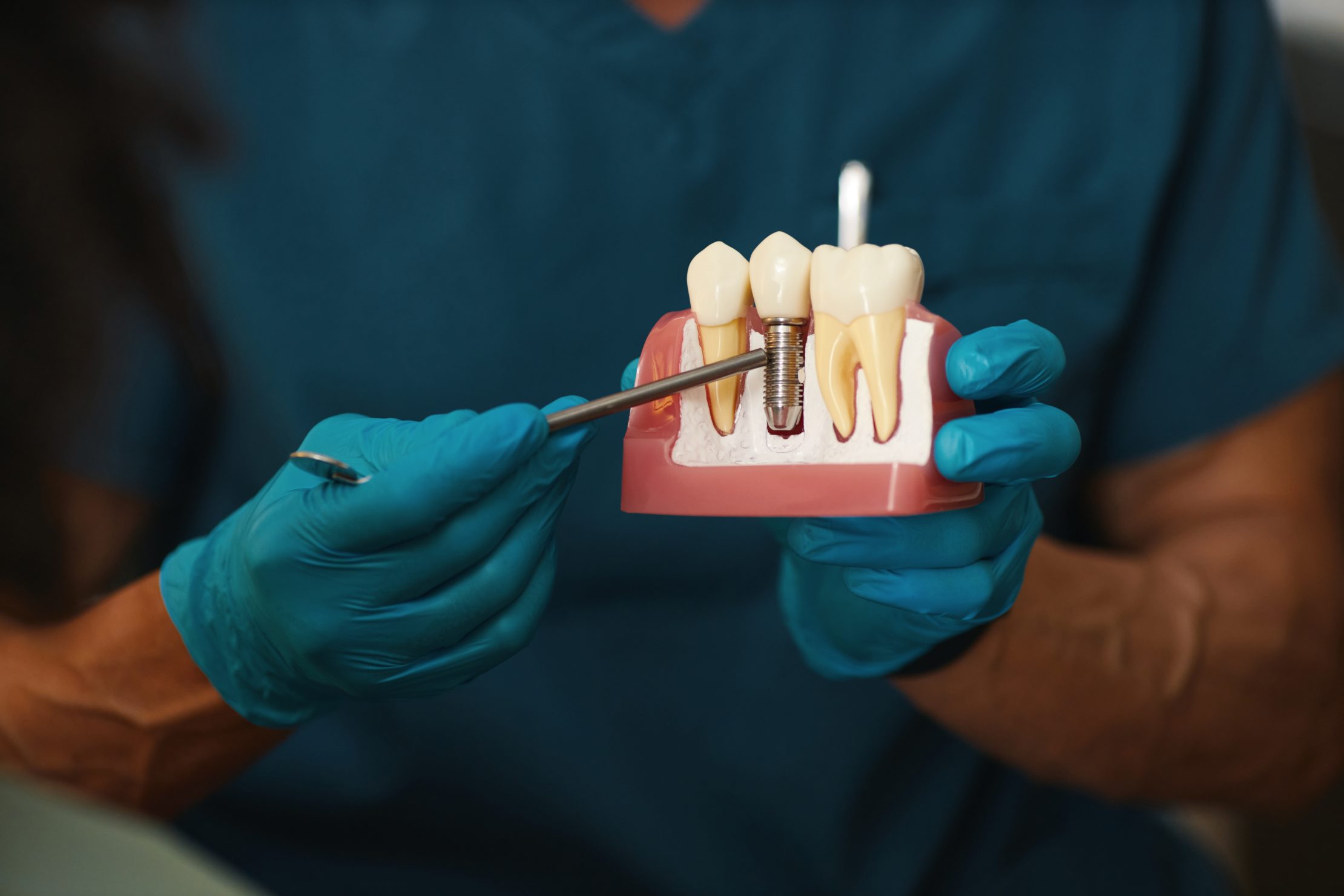
Choosing how to replace a missing tooth can feel overwhelming. At Gradeless Dental in Fishers, our team helps you weigh the benefits of each option with clarity and care so your treatment plan supports long-term oral health, comfort, and confidence. Whether you are considering dental implants or a dental bridge, understanding how each solution works and what to expect will help you move forward with confidence.
How Tooth Replacement Supports Oral Health and Confidence
Missing teeth affect more than your smile. Gaps can shift neighboring teeth, impact chewing, and place extra stress on the jaw. Over time, tooth loss can also contribute to bone loss in the jawbone. Replacing a missing tooth with a well-planned prosthesis preserves function, protects gums, and supports a natural-looking smile that feels comfortable day to day.
To choose the best tooth replacement, your dentist considers your specific needs, medical history, and goals. Gradeless Dental builds a personalized treatment plan to restore your smile that respects your timeline, comfort level, and desired outcome while keeping long-term maintenance and proper care in view.
What Are Dental Implants and How Do They Work?
A dental implant is an artificial tooth root, most often a titanium screw, placed in the jawbone to support a replacement tooth. Titanium is commonly used because the body accepts it well. Through osseointegration, the bone bonds to the implant over time, creating a stable foundation for crowns or other prosthesis options that look and feel like natural teeth.
The dental implant procedure involves careful planning and precise placement. After consultation and imaging, the implant is placed surgically. An incision is made at the site, the implant is positioned, and the area is closed to begin healing. Local anesthesia is used, and sedation may be recommended based on your comfort and medical history. Minor swelling or discomfort is common, and over-the-counter pain relievers often help during the first few days.
After healing, a second minor surgery may be needed to place abutments that connect a crown to the implant. A temporary tooth may be used during healing to maintain your smile. Dental implants work as a permanent solution when supported by healthy bone density and proper care, significantly improving daily function and quality of life.
What Is a Dental Bridge?
A dental bridge replaces a missing tooth by anchoring a replacement tooth to crowned neighboring teeth. This approach does not involve implant surgery and can be a strong, esthetic option when surrounding natural teeth are healthy. Bridges restore the look and feel of a full smile and can replace a single missing tooth or a small group of teeth in the same area.
The bridge process includes reshaping the supporting natural teeth for crowns, taking precise impressions, and placing a custom bridge that fits securely. For many patients, this offers a predictable timeline without the need for bone grafting or surgical recovery. With regular dental visits and proper care, bridges can provide reliable results for many years.
Which Treatment Is Right for a Missing Tooth?
The best choice depends on your goals, bone density, and the condition of nearby teeth. Implants protect bone and leave adjacent teeth untouched. Bridges avoid surgery and restore your smile sooner. A thorough consultation helps weigh comfort, timeline, long-term maintenance, and your specific needs before deciding.
Comparing Benefits, Risks, and Longevity
- Preservation of bone and teeth:
- Implants stimulate the jawbone and reduce future bone loss because the artificial tooth root integrates with bone.
- Bridges do not engage the jawbone and may require reshaping neighboring teeth to hold the replacement tooth securely.
- Surgical and health considerations:
- Dental implant surgery requires good healing, healthy gums, and adequate bone density. Some patients may need bone grafting to strengthen the implant site.
- Bridges typically avoid surgery and may be preferred when medical history or medications increase surgical risks.
- Maintenance and longevity:
- With regular dental visits and excellent home care, implants can offer strong longevity. Good brushing and flossing help prevent complications like peri-implant inflammation.
- Bridges also provide long-lasting results. Cleaning under the bridge is essential to protect gum tissue and natural tooth structure.
- Comfort and healing:
- Implants require healing time for osseointegration. Temporary discomfort or swelling can occur but is usually manageable.
- Bridges generally involve less post-procedure discomfort since they do not require implant placement in the jaw.
Step-by-Step: What to Expect From Each Treatment
A personalized consultation is the first step for both options. Gradeless Dental reviews your goals, completes an exam, and discusses the next step with a clear timeline and expectations.
Dental implant placement, simplified:
- Consultation and imaging: Assess bone density, implant site, and overall oral health. If needed, extraction of a damaged tooth can be coordinated.
- Implantation: The dentist or oral surgeon places the implant using a small incision. The titanium implant is positioned in the jawbone, and the area is closed to heal.
- Healing process: Osseointegration occurs as bone bonds to the titanium. A temporary tooth may be used.
- Abutments: After healing, a second minor surgery places abutments and the connector at the top of the implant.
- Restoration: A custom crown is attached to complete the artificial tooth. Implants may also support dentures or multi-unit prostheses.
Dental bridge process, simplified:
- Consultation: Review goals, evaluate supporting teeth, and plan the prosthesis.
- Tooth preparation: Neighboring teeth are reshaped, and impressions are taken for precise crowns.
- Temporary protection: A temporary bridge protects prepared teeth while the final is made.
- Final placement: The custom bridge is cemented, integrating the replacement tooth with the crowned supports.
- Follow-up: Bite is refined, and home care techniques are reviewed for long-term maintenance.
Some complex cases, such as severe bone loss, may involve additional planning with a specialist. Rare options like zygomatic implants can be discussed when standard approaches are not feasible.
Proper Care for Implants and Bridges
Consistent home care and regular dental visits protect your investment. Brush twice daily, clean around abutments or under a bridge with floss or water flossers, and schedule professional cleanings. Addressing small concerns early helps prevent complications and supports longevity for both solutions.
Patients with implants should keep the gums healthy and follow post-operative instructions closely after surgery. Use pain relievers as directed for short-term discomfort and contact the office if unusual swelling or persistent discomfort occurs. With proper care, both options can support a confident smile and strong function.
Candidacy and Health Factors
Every smile is unique. Across the United States, candidacy for implants considers bone density, overall oral health, and the position of adjacent teeth. Your medical history helps guide decisions about sedation, healing, and any risk of complications. If the bone is thin or soft, bone grafting can strengthen the area for a future implant.
When neighboring natural teeth are strong and well-positioned, a dental bridge can be a practical solution that avoids surgery. When protecting the jawbone and leaving adjacent teeth untouched is the priority, a dental implant may be recommended. For patients with multiple missing teeth, implant-supported options and dentures can be reviewed within a comprehensive dentistry approach.
Gradeless Dental’s Patient-First Approach
We take time to explain options clearly so you know what to expect at every step. Our team discusses materials like titanium, crown design, and how the connector and abutments work together to support an artificial tooth that looks natural. Your questions guide the conversation, and your comfort is respected throughout planning and treatment.
From the first consultation to the final restoration, we emphasize clear communication, careful evaluation, and a thoughtful pace that fits your needs. We look forward to meeting you and discussing your goals for a healthy and beautiful smile.
Ready to Explore Your Options in Fishers?
If you are comparing a dental bridge and a dental implant, our team is here to help you decide with confidence.
Schedule your appointment today and take the next step toward a complete, comfortable smile.