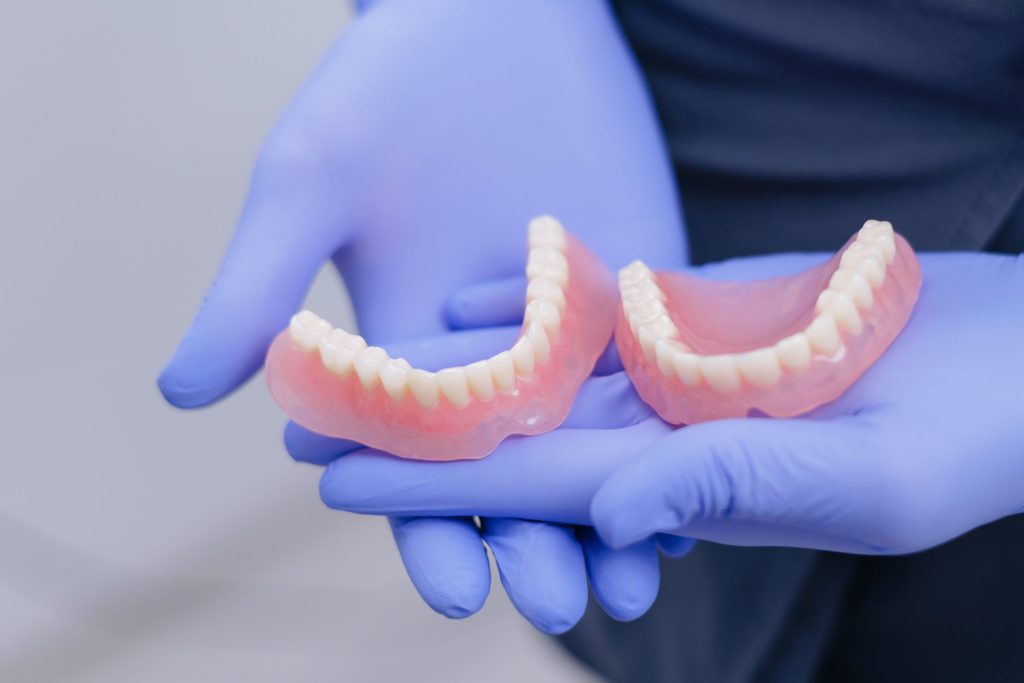
Holiday meals are meant to be enjoyed, but for many denture wearers, foods like turkey, rolls, and crunchy vegetables can bring a familiar worry: Will my dentures stay put? If you’ve noticed loose dentures when you eat, you’re not alone, and you’re not doing anything “wrong.” Dentures are carefully made to fit your mouth, but your mouth changes over time.
At Gradeless Dental in Fishers, IN, our team takes a patient-first approach to restoring comfort and confidence after tooth loss. Understanding why dentures shift during meals can help you know what’s normal, what needs attention, and what your next steps could be for better stability.
Why do loose dentures happen most often during meals?
Chewing creates strong, uneven forces, especially when biting into firmer foods or chewing on one side. Even a denture that feels fine at rest can lift slightly during chewing if the fit has changed. The lower denture is especially prone to movement because the lower jaw often provides less surface area and suction than the upper.
Food texture also plays a role. Sticky foods can tug at the denture base, while crunchy foods can rock dentures side-to-side. If you have gum irritation or a sore spot, you may unconsciously chew differently to avoid tenderness, which can further destabilize the fit of your dentures.
The most common reasons dentures loosen over time
Dentures are built to match the contours of your gums at the time they’re made. Over months and years, predictable changes can affect how they sit and seal.
Natural changes in the gums and jawbone
After tooth loss or extractions, the jawbone no longer receives stimulation from tooth roots and chewing forces. Over time, your body responds with bone resorption, a natural process where bone volume gradually decreases. This bone loss changes the shape of your gums and the bone underneath them.
As the bone ridge shrinks, the denture base may no longer match the current contours of your gums, leading to movement, gaps, and pressure points. This explains why traditional dentures often need maintenance even with good care and regular checkups.
Normal wear on the denture itself
Dentures endure daily wear, temperature changes, and constant contact with saliva and food. Over years of use, materials can experience normal wear, and small cracks may develop. Even subtle changes can affect stability, especially along the edges where suction and balance matter most.
You may not notice a crack by looking in the mirror, but you might feel a new “click,” a rocking sensation, or looseness that becomes noticeable at mealtime.
Weight loss, health issues, and changes in soft tissue
Your gum tissue can change with overall health, medications, hydration, and aging. Weight loss can reduce fullness in facial tissues and gums, making a previously snug denture feel different. Some health issues can contribute to dry mouth or inflammation, both of which can affect comfort and fit.
If your dentures suddenly feel different, it’s worth scheduling an evaluation rather than assuming it’s just “part of wearing dentures.”
Signs your denture fit needs attention
Some adjustment is expected when you first get new dentures, and many patients need a few weeks for facial muscles to learn how to help keep dentures in place during chewing and speaking. However, ongoing changes should be taken seriously, especially if stability is declining.
Common signs a loose denture should be evaluated include:
- Frequent slipping while eating or talking
- Soreness, sore spots, or persistent gum irritation
- Clicking sounds or rocking when you bite
- Needing more denture adhesive than before
- Difficulty chewing certain foods, especially on one side
- Food collecting under the denture base more often
If any of these sound familiar, the good news is that many fit issues can be improved with minor adjustments or by updating the surface that touches your gums.
Denture adhesive: helpful tool, not a long-term fix
Many denture wearers use adhesive for added confidence, especially during social meals. Used correctly, adhesive can provide better stability for a day’s activities and help reduce friction.
Adhesive works best when the denture fit is already close. If your dentures are significantly loose, adhesive may feel like a daily workaround that no longer performs. It can also mask a problem that needs care, such as a warped edge, uneven bite, or changes in bone density. If you feel like you cannot keep dentures secure without increasing adhesive, it’s a strong signal to have your fit checked.
Full dentures vs. partial dentures: why movement can feel different
Full dentures replace all teeth in an arch, while partial dentures replace several missing teeth and attach to remaining natural teeth for support. Because partial dentures rely on anchors, changes to those supporting teeth can influence stability. In some cases, a crown may be recommended to strengthen a natural tooth that helps hold the partial.
With full dentures, stability depends more on suction, muscle coordination, and how precisely the denture base matches the shape of your gums. Immediate dentures, placed right after tooth loss and extractions, often require future adjustments because the mouth continues to heal and change in the months after placement.
What Gradeless Dental can do when your dentures feel loose
A professional evaluation focuses on comfort, function, and protecting your oral tissues. At Gradeless Dental, the goal is to help you speak and eat comfortably while supporting long-term oral health.
Depending on what our team finds, solutions may include:
- Examining fit, bite, and pressure points
Dr. Gradeless checks how the denture sits on your gum tissue, how your bite closes, and whether any areas are creating friction or instability. - Minor adjustments for comfort and balance
Sometimes a simple adjustment to relieve a pressure point or improve how the denture contacts the gums makes a meaningful difference. - Reline or rebase options when the fit surface needs updating
As the shape of your gums changes, adding a new layer of material inside the denture can improve the seal and stability. In some cases, keeping the teeth portion but replacing the fit surface can restore a more secure feel. - Discussing replacement when the denture is worn or damaged
If there are small cracks, significant wear, or repeated fit problems, new dentures may be the most predictable path to comfort.
Considering a more permanent solution: dental implants for stability
Some patients want a stronger hold than traditional dentures can provide. Dental implants can support certain denture designs and help reduce movement, especially for a lower denture where stability is often hardest to maintain. Implant support can also help slow ongoing bone loss by providing stimulation to the jaw.
Implants aren’t automatically the right choice for everyone. A good candidate typically needs adequate bone density, and your health history matters. During a consultation, Dr. Gradeless can explain whether implants could fit your goals and anatomy, and what options are appropriate for replacing missing teeth in a comfortable, long-term way.
Care tips that help you keep dentures fitting comfortably
Daily habits make a difference in how your mouth feels and how your dentures perform. Along with regular dental visits, focus on care of your dentures and the tissues underneath them.
- Brush your dentures daily to remove food and plaque.
- Store dentures in a soaking solution or lukewarm water to prevent warping.
- Clean your gums, tongue, and palate each day to support healthy gum tissue.
- Avoid using hot water, which can distort the denture base.
- Bring dentures in if they chip, crack, or start rubbing, even if the damage looks minor.
These steps support comfort and overall health, and they help your dental team spot small problems before they turn into bigger ones.
Ready for steadier meals? Schedule a denture evaluation in Fishers, IN
If loose dentures are making meals stressful, a checkup can bring clarity and relief. Gradeless Dental provides full and partial denture care, along with restorative options designed around your comfort and long-term health. Our team will listen to what you’re experiencing, evaluate the fit of your dentures, and recommend next steps that match your goals.
Schedule a visit with Gradeless Dental to talk through your symptoms, explore solutions, and enjoy eating with more confidence.